Ulriksdal Palace
Ulriksdals slott – Explore Centuries of Swedish Monarchy and Historic Parklands

Ulriksdal Palace offers a unique glimpse into Swedish royal life with its baroque architecture, the intimate Confidencen Theatre, and a sculpture-filled Orangery. Located in Stockholm’s first national city park, it combines centuries of history with cultural experiences and scenic parkland walks.
Ulriksdal Palace—Royal Heritage in Sweden’s First National City Park
Nestled along the shores of Edsviken in Solna, just 6 km north of central Stockholm, Ulriksdal Palace is a serene counterpoint to the city’s grand urban palaces. Surrounded by the greenery of the Royal National City Park, it blends royal history, architecture, theater, and landscape into one quietly majestic estate.
Long before Ulriksdal became a royal residence, the estate began as Jakobsdal, founded in 1644 by the celebrated field marshal Jacob De la Gardie. Contemporary accounts describe a residence of striking grandeur for its time: although the everyday interiors were modest, the family possessed rich tapestries, cushions, and ceremonial furnishings that transformed the halls during festivities. Silver vessels, ornate drinking cups, and lavish table settings made Jakobsdal a stage for aristocratic display.
Like the Royal Palace in Stockholm and Drottningholm Palace, Ulriksdal forms part of a wider constellation of royal residences that chart the evolution of Swedish power, taste, and court life.


Ulriksdal in the Royal Landscape
From coronations to war heroes
Ulriksdal has stood witness to some of Sweden’s most symbolic moments. In 1650, the palace served as the departure point for Queen Christina’s coronation procession to Stockholm, a carefully staged display of royal authority.
In 1684, Queen Dowager Hedvig Eleonora renamed the estate Ulriksdal in honor of her grandson Prince Ulrik, firmly anchoring it within the royal family’s sphere. During the 18th century, King Adolf Fredrik and Queen Lovisa Ulrika enriched the palace with new interiors and cultural life, including the creation of the Confidencen Theatre.
After the De la Gardie era, the estate changed hands several times before entering the royal sphere. In 1669 it was purchased by Queen Dowager Hedvig Eleonora, who expanded the wings that still frame the palace courtyard. She later gifted the estate to her grandson Prince Ulrik, son of King Karl XI and Queen Ulrika Eleonora, giving the palace its present name: Ulriksdal. The prince died young, and the estate reverted to the Crown.
During the 18th and early 19th centuries, Ulriksdal was home to several royal residents, including Karl XI, Crown Prince Gustav (later Gustav III), and Queen Sophia Magdalena, whose court at Ulriksdal was described as austere and ceremonially rigid. After periods of disuse, the palace found a new purpose in 1822 when Karl XIV Johan transformed it into a residence for wounded veterans of the Finnish War (1808–1809). The interiors were completely refitted for this humanitarian mission, turning a pleasure palace into a place of recovery and dignity.
The invalid home was later dissolved by King Oscar I, who began restoring Ulriksdal as a summer residence for the crown prince couple, Carl (later Karl XV) and Louise. From 1857 onward, they spent their summers here, surrounding themselves with art, curiosities, and historical furnishings that made the palace a living museum of Swedish taste.


Architectural evolution
Ulriksdal’s architecture reflects centuries of changing styles and ambitions. The original Late Renaissance palace by Hans Jacob Kristler was later reshaped by leading architects such as Jean de la Vallée, Nicodemus Tessin the Elder, and Carl Hårleman.
The addition of the characteristic mansard roof gave Ulriksdal its elegant silhouette, much of which dates from the 18th century. Inside, layers of design—from baroque to 20th-century modern—reveal how each generation of royals left its mark on the residence.
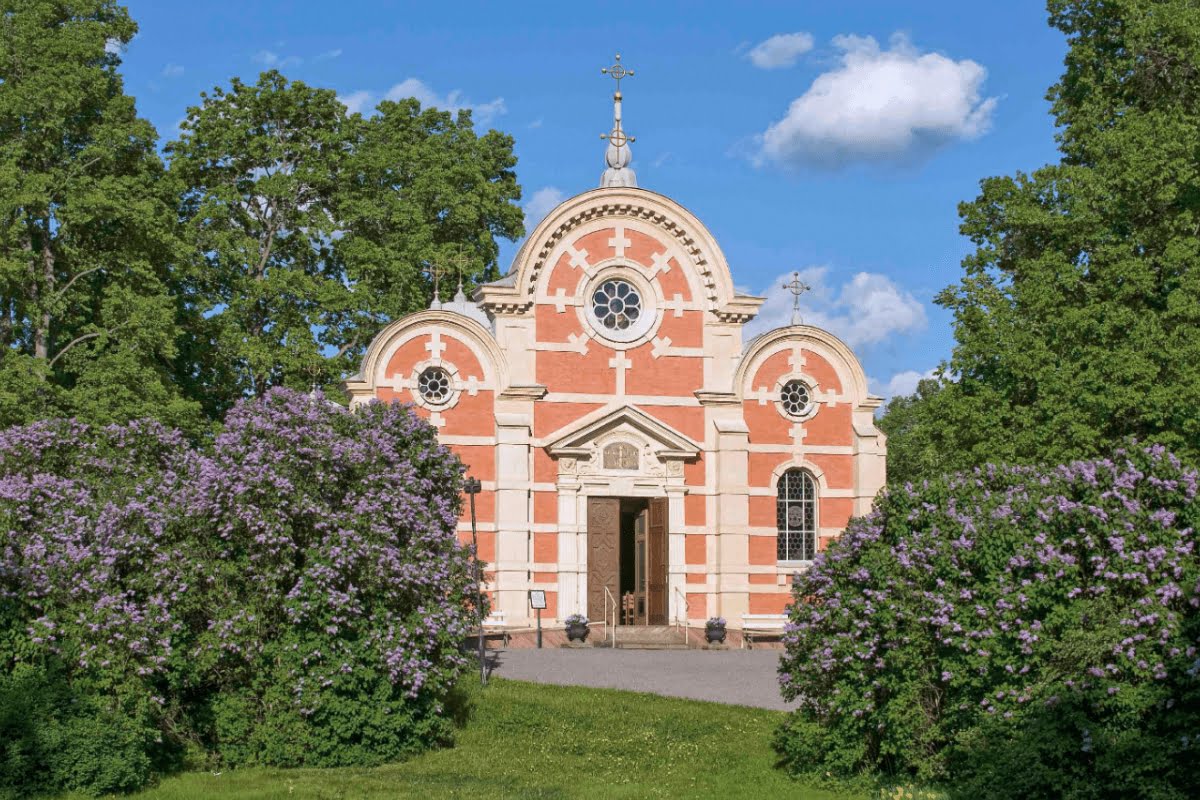
Ulriksdal’s chapel also reflects this layered history. The original church built by Hedvig Eleonora was later replaced by the elegant chapel designed by architect Fredrik Wilhelm Scholander, whose 19th‑century interpretation of historic styles added a final architectural chapter to the palace grounds.
Features worth exploring
- Confidencen Theatre: Sweden’s oldest Rococo theatre, offering summer performances and guided tours in a historic court setting.
- 1923 Living Room: A refined interior by Carl Malmsten, gifted to King Gustaf VI Adolf and Queen Louise, showcasing early 20th-century Swedish design.
- The Orangery Museum: A light-filled gallery with sculptures by Johan Tobias Sergel, Carl Milles, and other prominent artists.
By the mid‑19th century, Ulriksdal had become a richly furnished royal home. Contemporary descriptions speak of more than one hundred rooms decorated with a blend of luxury and comfort. The upper floor, inhabited by the royal couple, contained collections of antique furniture, curiosities, and historical objects that made the palace resemble a museum of Swedish aristocratic culture.
The Hall of Knights displayed stained‑glass windows, while the Banqueting Hall, hung with gilded leather tapestries and paintings by David Klöcker Ehrenstrahl, showcased an extraordinary array of ceremonial drinking vessels. Another chamber contained “floribus,” “snibb bowls,” and other now‑forgotten implements of the old drinking culture—items once essential for anyone wishing to avoid the accusation of “failing in drink, and therefore in other matters as well.”
Elsewhere in the palace were carved walnut and oak cabinets, mirrors, faience, and porcelain comparable to the collections at Rosenborg Castle in Copenhagen. Among the curiosities was the so‑called ‘King Gösta’s Table,’ a polished oak table into which Gustav Vasa had roughly carved his name.



Explore Ulriksdal Palace today
A visit to Ulriksdal offers a journey through Swedish royal history in one compact setting—palace interiors, a theater, sculpture, and parkland. Highlights include:
- Architectural details spanning the 1600s to the 1900s.
- The sculpture-filled orangery and Mediterranean-inspired gardens.
- Royal apartments and the Confidencen Rococo theatre.
- Extensive parkland and walking trails along Edsviken’s shoreline.
🏰 Royal palaces and castles north of Stockholm
Ulriksdal Palace belongs to a distinguished group of historic estates stretching north of Stockholm. Nearby landmarks include Steninge Palace, a Baroque estate overlooking Lake Mälaren; Gustav III’s Pavilion in nearby Haga Park, an elegant neoclassical retreat closely associated with Sweden’s Enlightenment-era monarch; and Skokloster Castle, one of Europe’s best-preserved 17th-century Baroque castles, dramatically situated along the shores of Lake Mälaren.
Visitor Information
- 🕰️ Opening Hours:
- Summer Season (June–August): Open for guided tours.
- Off-season: Closed (grounds and café open year-round).
- 📍 Address: Slottsallén, Ulriksdal, 170 79 Solna, Sweden
- 🚶♀️ Getting There: From Stockholm, take the Red Line metro to Bergshamra and transfer to bus 503. Alternatively, take a commuter train to Ulriksdal Station and walk or take a local bus.
- 🔍 What to Expect: Historic royal palace, Confidencen Rococo theater, sculpture museum, Carl Malmsten interiors, and landscaped parklands.
- 🎟️ Admission: Entry fee applies. Guided tours are included. Children under 7 enter free.
- 🎧 Guided Tours: Available during the summer season. Group tours by prior arrangement.
- ☕ Café: Seasonal café on-site offering light meals and drinks during palace visiting hours.
- 🛍️ Shop: Gift items, books, and souvenirs available at the Visitor Center.
Continue your journey through royal history in our guide to Stockholm’s castles and palaces.
Explore palaces, ceremonies, dynastic history, and the architecture of the Swedish monarchy.


