


The filmmaking process is an infamously chaotic one, full of twists and turns that can often lead to a final product much different from the filmmaker's initial vision. Even the most legendary movies in cinematic history are not exempt from this trend, with many directors claiming that their ultimate vision would surpass what was theatrically released. A few lucky directors have even been given a shot at releasing their complete vision in the form of a 'Director's Cut' released after the film's theatrical release.
While not every Director's Cut sticks the landing for some viewers, many good films have been great or bad films have been saved by an extended edition. From modern superhero films finding new life with extended runtimes to age-old classics being expanded upon, the history of Director's Cuts has introduced the world to a slew of new favorite takes on previously released films. Some have even become such staples of film history that their existence eclipses the theatrical versions.
10 Stanley Kubrick's Take on The Shining Expands Upon the Expertly Crafted Terror of the Original Film


- In the European extended version of The Shining, an extra scene features Wendy reading a newspaper article about the hotel, which was removed from the American release by Stanley Kubrick to tighten the pacing.
The Shining broke barriers in the film industry upon its release, cementing horror as a genre still worthy of praise and admiration. Film critics couldn't possibly imagine how it could be improved upon, but the film's legendary director, Stanley Kubrick, had a unique idea for such improvements. In a shocking reversal of typical director's cut fare, Kubrick's cut of the film was shorter than the original release, decreasing the film's runtime by 31 minutes.
Some fans of The Shining even consider the longer release the director's cut despite the fact that Kubrick has gone on record saying his second take, the one released outside the U.S., was the superior version of the film. By eliminating some scenes of extended dialogue and worldbuilding, the story was made more concise, but fans disagree on which version reigns supreme. No matter which version fans might individually consider the true 'director's cut,' there exist several versions of the film that enable ideal viewing experiences for different types of fan. At the end of the day, the film and its impeccable direction are so powerful no matter which version viewers opt for.

- Release Date
- May 23, 1980
- Runtime
- 144 minutes
- Director
- Stanley Kubrick
- Writers
- Diane Johnson, Stanley Kubrick, Stephen King
- Producers
- Stanley Kubrick


Cast
-
 Jack NicholsonJack Torrance
-
 Shelley DuvallWendy Torrance
A family heads to an isolated hotel for the winter where a sinister presence influences the father into violence, while his psychic son sees horrific forebodings from both past and future.
- Main Genre
- Horror
- Production Company
- Warner Bros., Peregrine, Hawk Films, Producers Circle

9 Apocalypse Now Went From Legendary to Masterful With the Redux Cut

- The "Redux" version of Apocalypse Now adds about 49 minutes of footage, including a controversial sequence where the characters visit a French plantation.
Francis Ford Coppola's seminal work, Apocalypse Now, got a fresh layer of paint upon its rerelease in 2001 with Apocalypse Now Redux adding several small alterations and two new sequences. The reworked version premiered at Cannes to positive reactions across the board, with many viewers saying the additions added depth to the already dense narrative. Some fans felt the theatrical release was still superior, however, with common criticisms involving the lack of necessary improvements.
Like many director's cuts, Apocalypse Now Redux falls into the category of being a solid cut that still wasn't necessary. This dissonance between compact filmmaking and throwing everything at the wall is a frequent talking point between creatives and critics. Regardless, Redux stands apart as one of the most talked about director's cuts in cinematic history, and for that alone, it deserves praise.

- Release Date
- August 15, 1979
- Runtime
- 147 minutes
- Director
- Francis Ford Coppola
- Writers
- Joseph Conrad, John Milius, Francis Ford Coppola, Michael Herr
Cast
-
 Marlon Brando
-
 Martin Sheen
A U.S. Army officer serving in Vietnam is tasked with assassinating a renegade Special Forces Colonel who sees himself as a god.
8 Richard Donner's Vision For Superman II Was Saved With His Cut of the Film

- The "Richard Donner Cut" of Superman II restores much of the original director Richard Donner’s vision, including a different ending that was originally planned for the first film.
In what is, interestingly, one of two times in the history of DC Comics adaptations, Superman II: The Richard Donner Cut restored the vision of an original director who had been replaced halfway through the filming stage of production. The theatrical version of Superman II, credited to director Richard Lester, was well received among critics, but fans clambered for the return of Superman director Richard Donner and his original vision for the sequel that had been usurped behind the scenes. It would take whole decades for this wish to be granted, but the Richard Donner Cut was finally gifted to the world in 2006 via a Blu-Ray and DVD release.
This version of the film included several additional sequences and helped restore the tonality of Donner's vision for the film. While the film still had the levity the character deserved, it took him and his powers a lot more seriously in Donner's version as opposed to the more silly angle Lester approached the narrative with. The expanded scheming and villainy of Lex Luthor and the film's other antagonists also made this cut a home run for fans of the original film. All in all, the Richard Donner Cut was a net positive for the legacy of the film and made happy fans out of the majority of the character's massive fanbase.
Superman agrees to sacrifice his powers to start a relationship with Lois Lane, unaware that three Kryptonian criminals he inadvertently released are conquering Earth.
7 The Already Phenomenal Aliens Got a Healthy Boost of Perfection With Its Extended Edition

- The extended version of Aliens includes a scene where Ripley learns that her daughter, Amanda, died during the 57 years that Ripley was in hypersleep.
Aliens stunned the world when it somehow managed to be an even more impressive and legendary film than its predecessor. The sequel made a much more rounded character out of the already lovable Ellen Ripley, telling a layered story within the narrative playground the first film helped establish. But the exciting worldbuilding didn't stop there—eventually, director James Cameron's Director's Cut was released, making an already perfect film somehow better.
The Aliens Director's Cut includes additional scenes with Ripley on Earth, a couple of new, intense action sequences, and a whole slew of new dialogue that compels the narrative forward. While most fans enjoy this cut, some still argue the theatrical release is superior as it was simply more concise. Still, the cut is a must-watch for fans of the original, and the scenes add tremendous depth and fun to the already fantastic film that Aliens was.

- Release Date
- July 18, 1986
- Runtime
- 137 minutes
- Director
- James Cameron
- Writers
- James Cameron
- Producers
- Gale Anne Hurd
- Prequel(s)
- Alien
- Sequel(s)
- Alien 3, Alien Resurrection, Prometheus, Alien: Covenant, Alien: Romulus
- Franchise(s)
- Alien
Cast
-
 Sigourney WeaverRipley
-
 Carrie HennNewt
Decades after surviving the Nostromo incident, Ellen Ripley is sent out to re-establish contact with a terraforming colony but finds herself battling the Alien Queen and her offspring.
- Main Genre
- Sci-Fi
6 X-Men Days of Future Past: The Rogue Cut Cements the Film as a Highlight of the Franchise


- The "Rogue Cut" of X-Men: Days of Future Past adds about 17 minutes of footage, including a subplot where the X-Men rescue Rogue from a mutant prison.
The X-Men franchise was ramping up with the introduction of prequels telling the story of Charles Xavier and Erik Lehnsherr and the early days of the X-Men. This part of the franchise would eventually collide with the original era of characters in the highly anticipated X-Men: Days of Future Past, a loose adaptation of one of the X-Men's most iconic runs in the comics. While the film was beloved by many Marvel fans, some felt it lacked elements that made the original story so compelling -- a criticism that was almost completely remedied by the later released X-Men Days of Future Past: The Rogue Cut.
This version of the film added countless new scenes and elements that strengthened the film to an almost impossible level. Unsurprisingly, a large focus of this version of the film was the character of Rogue, who was given a much more comprehensive and satisfying arc. Other legacy characters and character moments were highlighted in this version, like Iceman and Kitty Pryde, and the entire film is made better for it. Pretty much unanimously, this is the definitive version of the film for fans of the characters and casual audiences alike.

- Release Date
- May 15, 2014
- Runtime
- 132 minutes
- Director
- Bryan Singer
- Writers
- Simon Kinberg
- Producers
- Hutch Parker, Josh McLaglen, Lauren Shuler Donner, Stan Lee
- Prequel(s)
- X-Men: The Last Stand, X2: X-Men United, X-Men, X-Men: First Class
- Sequel(s)
- X-Men Apocalypse, X-Men: Dark Phoenix
- Franchise(s)
- X-Men
Cast
-
 Hugh JackmanLogan / Wolverine
-
 James McAvoyCharles Xavier
The X-Men send Wolverine to the past in a desperate effort to change history and prevent an event that results in doom for both humans and mutants.
- Main Genre
- Adventure
5
The Extended Version of Donnie Darko Offers More of the Film's Unique Tone and Narrative
- The Director’s Cut of Donnie Darko adds about 20 minutes of footage.
The electrifying and unique Donnie Darko had found itself a cult following in the years following its 2001 release, enabling the film's director, Richard Kelly, to revisit it three short years later. Donnie Darko: The Director's Cut included previously deleted scenes, some additional, big-budget soundtrack inclusions, and a compelling on-screen visual of quotes from an in-universe book that made the film less ambiguous in its winding plot. This version of the film feels much more structured and well-paced compared to the raw nature of the original release.
The majority of fans praise the Director's Cut as the superior version, but the theatrical release has its own fans. Some argue that the ambiguous nature of the original version was lost in the rerelease, making it a less special experience. Still, the film doesn't reveal all of its cards to the audience and still demands a lot of thought from its viewers in both versions. Ultimately, the Director's Cut is a cleaner and more expansive take on the film, making it a wonderful and almost necessary take on the story.

- Release Date
- October 26, 2001
- Runtime
- 114 minutes
- Director
- Richard Kelly
- Writers
- Richard Kelly
- Producers
- Adam Fields, Nancy Juvonen, Sean McKittrick
Cast
-
 Jake GyllenhaalDonnie Darko
-
 Jena MaloneGretchen Ross
After narrowly escaping a bizarre accident, a troubled teenager is plagued by visions of a man in a large rabbit suit who manipulates him to commit a series of crimes.
4 The Iconic Director's Cut of Blade Runner Has Become an Integral Part of the Film's Continued Legacy

- The "Final Cut" of Blade Runner is the only version over which director Ridley Scott had complete artistic control.
It is hard to find a conversation about Blade Runner that does not include an aside about the different versions of the film. The Director's Cut of the 1982 sci-fi epic is one of the most iconic alternate versions of a film in cinematic history, significantly changing the tone of the film and offering a very different angle to the complex narrative. Fans tend to be pretty torn on which is the superior version, with many claiming they're both worth a watch.
The most notable difference in the Director's Cut is the lack of narration from Harrison Ford's Deckard, which eliminates some on-the-nose dialogue and the inner thoughts of the protagonist, for better and for worse. This allows the Director's Cut to feel like a massive step in a different direction, one in which the film's lead and his morality is much more ambiguous. Other minor changes include visual choices like coloration and auditory ones like sound effects.

- Release Date
- June 25, 1982
- Runtime
- 118 minutes
- Director
- Ridley Scott
- Writers
- David Webb Peoples, Hampton Fancher, Philip K. Dick
- Producers
- Michael Deeley, Run Run Shaw


Cast
-
 Harrison FordDeckard
-
 Rutger HauerBatty
A blade runner must pursue and terminate four replicants who stole a ship in space and have returned to Earth to find their creator.
- Main Genre
- Sci-Fi
3 Terry Gilliam's Iconic Brazil Is Made Even More Profound In Its Extended Edition

- In Terry Gilliam’s Brazil, the extended "Final Cut" includes a crucial scene where the protagonist, Sam Lowry, dreams of escaping on wings.
Terry Gilliam's Brazil is one of the most unique cases of alternate versions in cinematic history, with not just one alternative version but two. The most famous versions are Gilliam's original director's cut and the heavily edited U.S. theatrical release. Gilliam's cut, often called the "Final Cut," runs for 142 minutes and represents his complete vision of the film. It tells a dark, satirical story set in a bureaucratic society, with a complex plot and a grim ending that fits the movie's themes.
On the other hand, the U.S. theatrical version, known as the "Love Conquers All" cut, was shortened to 94 minutes and given a happier ending by the studio, which wanted to make the film more appealing to a mainstream audience. This version softened the film's impact, altering its tone and message in ways that disappointed Gilliam and many fans. Gilliam's cut is often considered the best version because it fully captures the film's intended tone and depth. The director's cut keeps the dark humor, detailed world-building, and sharp social commentary that are key to Brazil's critique of authoritarianism and excessive bureaucracy, making it the undeniably definitive version of the film.
2 Zack Snyder's Justice League Turned a Failed Film Into a Masterclass of the Genre

- Zack Snyder’s four-hour version of Justice League includes a new epilogue featuring a "Knightmare" sequence, where Batman envisions a dystopian future ruled by Darkseid, and the reintroduction of Jared Leto's Joker—a scene that was never part of the original theatrical release.
The Justice League finally made their big screen debut in Justice League in the original theatrical release in 2017, often referred to as the "Whedon Cut." This version was completed by director Joss Whedon after Snyder had to step away due to a family tragedy. "Josstice League" as it has been dubbed by fans, runs for about 120 minutes and marks a significant departure from Snyder's original plans. The studio pushed for a lighter tone, more humor, and a shorter runtime, resulting in a movie that felt rushed and uneven to many fans.
In contrast, the "Snyder Cut," released in 2021 after a massive fan campaign, is a four-hour epic that closely follows Snyder's original vision for the film. This version includes more character development, a darker tone, and a more coherent storyline, providing a deeper and more satisfying experience for viewers. It is widely considered the superior version because it fully realizes Snyder's intended vision for the story and hits many fan-pleasing moments without sacrificing the dramatic weight and true nature of its characters and storylines.

- Release Date
- March 18, 2021
- Runtime
- 242 minutes
- Director
- Zack Synder
- Writers
- Chris Terrio
- Producers
- Charles Roven, Deborah Snyder
- Prequel(s)
- Batman v Superman: Dawn of Justice
- Franchise(s)
- DC Extended Universe
Cast
-
 Batman / Bruce Wayne
-
 Superman / Clark Kent
Determined to ensure that Superman's ultimate sacrifice wasn't in vain, Bruce Wayne recruits a team of metahumans to protect the world from an approaching threat of catastrophic proportions.
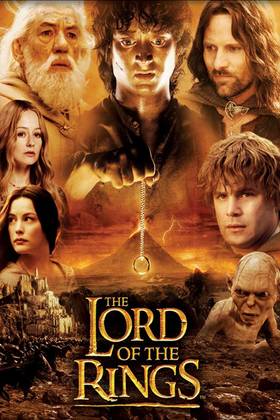
1 The Extended Edition of the Lord of the Rings Trilogy Is Required Viewing For Any Fan of Middle-earth


- The extended editions of The Lord of the Rings include additional scenes shot specifically for these versions, like the Mouth of Sauron encounter in The Return of the King, which was not shown in theaters.
The extended versions of The Lord of the Rings trilogy are widely regarded as the definitive editions of the films, offering a more complete and immersive experience of J.R.R. Tolkien’s epic story. These versions add roughly two hours of additional footage across the three films, expanding on character development, plot details, and the rich world-building that makes Middle-earth so captivating. Scenes that were shortened or left out of the theatrical releases, such as the fate of Saruman and the full story of Aragorn and Arwen's relationship, are restored, providing greater depth and context to the narrative. The extended editions also include more moments of humor, emotion, and lore that fans of the books particularly appreciate, making the story feel fuller and more faithful to Tolkien’s original work.
For many fans and critics, these extended versions are the definitive way to experience The Lord of the Rings because they offer a more nuanced and satisfying portrayal of the story’s themes and characters. The additional footage allows the films to breathe, giving more time to explore the complexities of the characters and the intricacies of Middle-earth. This extra content enriches the viewing experience, making the journey feel more epic and emotionally resonant. While the theatrical versions were already highly acclaimed, the extended editions are seen as the ultimate versions, providing everything the films needed to be a true adaptation of Tolkien’s masterpiece.
- Created by
- J.R.R. Tolkien
- First Film
- The Lord of the Rings: Fellowship of the Ring
- Latest Film
- The Hobbit: The Battle of the Five Armies
- Upcoming Films
- The Lord of The Rings: The War of The Rohirrim
- First TV Show
- The Lord of the Rings The Rings of Power
- Latest TV Show
- The Lord of the Rings The Rings of Power
The Lord of the Rings is a series of epic fantasy adventure films and television series based on J. R. R. Tolkien's novels. The films follow the adventures of humans, elves, dwarves, hobbits and more in Middle-earth.
- First Episode Air Date
- September 1, 2022
- Cast
- Elijah Wood, Viggo Mortensen, Orlando Bloom, Sean Astin, Billy Boyd, Dominic Monaghan, Sean Bean, Ian McKellen, Andy Serkis, Hugo Weaving, Liv Tyler, Miranda Otto, Cate Blanchett, John Rhys-Davies, Martin Freeman, Morfydd Clark, Ismael Cruz Cordova, Charlie Vickers, Richard Armitage
- Video Game(s)
- LEGO Lord of the Rings, The Lord of the Rings Online, The Lord Of The Rings: Gollum, The Lord of the Rings: The Third Age, The Lord of the Rings: The Two Towers, The Lord of the Rings: War in the North, The Lord Of The Rings: Battle For Middle-Earth, The Lord of The Rings: Battle For Middle-Earth 2, The Lord of the Rings: The Fellowship of the Ring
- Genre
- Fantasy, Action-Adventure
- Where to Stream
- M, Prime Video, Hulu